
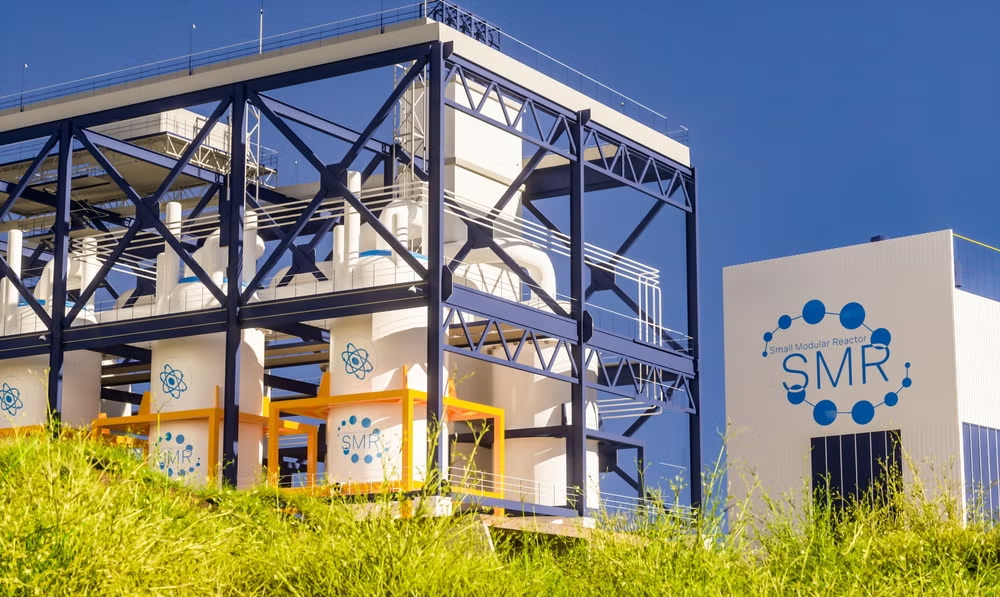
Small Modular Reactors
What is an SMR? Small modular reactors (SMRs) are defined as nuclear reactors generally 300 MWe equivalent or less, designed with modular technology using module factory fabrication, pursuing economies of series production and short construction times. A few small reactors are already in operation and there are dozens of designs in development. Size Traditional nuclear reactors produce around 1000 MWe or more of electricity per unit. SMRs, by contrast, are defined by their?modest electrical output – typically?less than 300 MWe. Some definitions extend to?medium-sized reactors?of up to 600 MWe. The smaller capacity of SMRs allows for deployment in settings where large plants may not be practical – such as remote communities, industrial clusters, or regions with small electricity grids. Modularity The “modular” in small modular reactor refers to both the design and construction approach. Both large and small nuclear reactors increasingly make use of modular construction techniques – assembling major components in factories or specialized facilities before transporting them to site. This approach improves quality control, shortens on-site construction times, and can reduce overall costs. However, SMRs take modularity several steps further: Factory fabrication: components or even entire reactor modules are designed to be built in factories under controlled conditions. Serial production: SMR designers plan for?serial?production?to achieve economies of series, similar to those achieved in the aerospace industry. On-site assembly: factory-fabricated modules are shipped to the site for assembly potentially reducing construction times and costs. Scalability: many SMRs are designed for incremental deployment, reducing financial risk and providing flexible solutions for customers and end users.